Have you ever simply realised something? Perhaps you understood that the energy of a place is wonderful, or perhaps rather unpleasant. Perhaps you suddenly knew this thing you were doing was wrong. This realisation happened so instantly, as if a light was spontaneously born within your mind. Bypassing all analysis, all thought; it simply appeared. If that ever happened to you, you had an awakening of the consciousness.
This is because to awaken consciousness is to realise something. The word “realise” can be broken down as follows:
Root: real (from Old French reel, Latin realis, meaning “actual, real”).
Suffix: -ize (from Greek –izein, meaning “to make or do”).
Therefore when we realise something, we make something previously unreal – false – real. This is an incredible faculty. This process does not happen through the intellect (the mind is too slow for that). It also does not happen through any sense (touch, smell, taste.) It happens through pure consciousness.
In practical terms, what we consider real, what we are conscious of is our reality. The truths that we have acquired about how e.g. relationships work, how the physical world works, how people “are”, what our psychology “is”, constitutes the sum total of our reality. Yet something about this understanding of reality must be incorrect. We make so many mistakes. We are so wrong about so much. We suffer with no end. This is because we only perceive a small aspect of reality, and it is deeply disfigured. We only have a small portion of our consciousness activated. This is marvellous news. This means that wherever we make a mistake, wherever we don’t know something, we are tapping into the raw potential of wisdom, of consciousness, of truth itself.
In more metaphysical terms, consciousness is a field. It is spread throughout the entirety of creation. If we access it we know without thinking, wee perceive without using the mind. Just like the physical body responds to physical stimuli, and lets us experience them, our astral (or emotional body) allows us to experience emotions, our mental body to experience thoughts, our body of consciousness allows us to be conscious. We all posses a body of consciousness. No matter how complicated our inner psychology, how many traumas we have had, how much turmoil we are going through, we all posses the innate capacity to tune into the field of consciousness. We do that through the present moment. Through the here and now.
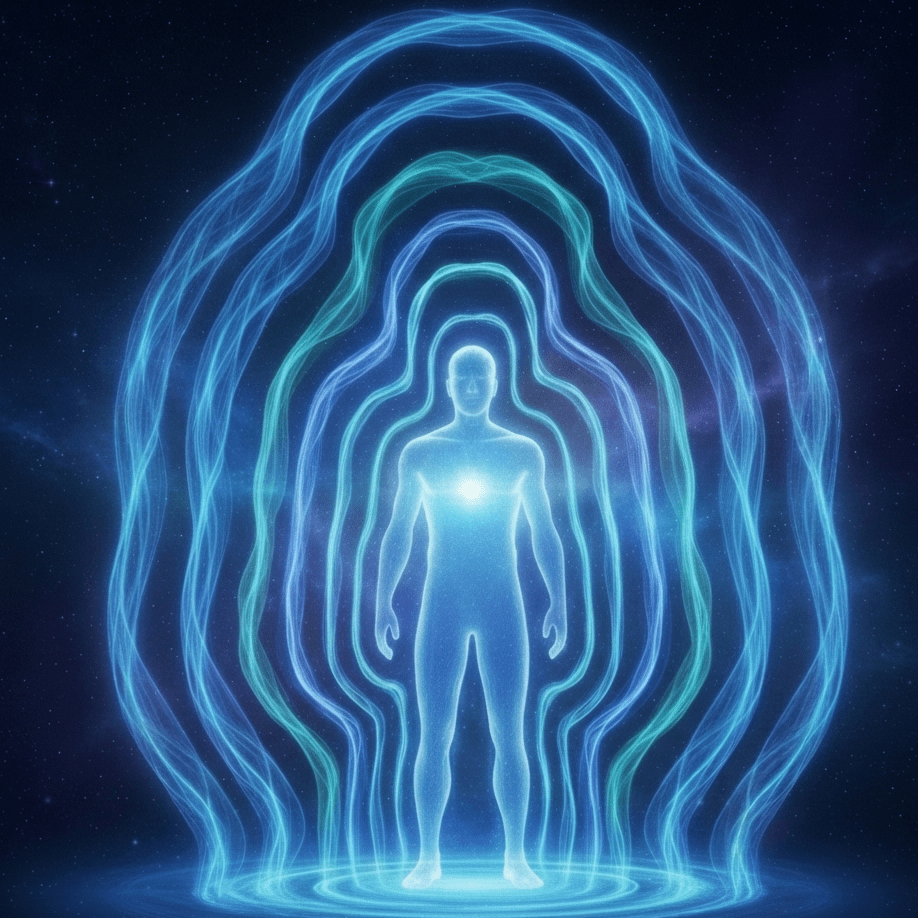
It is a truly incredible phenomenon. No matter what is happening to us, no matter how miserable we feel, or how strongly we are consumed by thoughts, how much we think “this will never end”, there is always something in us that is perceiving all of it. The degree to which we are perceiving it is the degree to which we are accessing and using our consciousness. We can check how much we use this faculty by looking back at how much we remember. Because if we truly were conscious (making something real within us) we would remember it.
However what is the practical use of consciousness. Perhaps you are thinking: “Yes, I want to know the truth of reality, I want to escape illusion, to escape the matrix. But I am in so much suffering, in so much pain, I have to sort that out first…” Well, the truth of the matter is that you can only ever truly solve your problems with consciousness. If you truly knew, and not intellectually, but with experience, like how you know that putting a finger into fire will burn your skin, you would not suffer. You would know how to live and react in ways that would not cause you problems. But how do we come to know? We know by simply observing.
To observe is not to think. Have you ever looked at a bird without already the notion that it is a bird – without the word “bird” in mind? (Try it, it is marvellous experience). Have you ever listened to the movement of water without the framework of it being a sound that water makes? The moment that we assume that we know something we are already not observing. We are in the sphere of assumed knowing. If we use the knowledge we already have, we do not go beyond our reality, we stay firmly in it. We stay in the illusion that is the very fundament of our suffering. Only by suspending judgement we can find out something new.
What does the mind sound like?
“This is good.
This is bad.
This is attractive.
This is unattractive.
This is hot.
This is cold.”
The mind, even if supposingly subtle and complex is actually painfully dualistic. This means that it operates between two poles, while reality is always something beyond that. Is a face attractive? What does that mean? If you observe deeper and deeper, with less and less preconceptions, a face, it is pure energy. The notion unattractive/attractive is not within it. It is a trick of the mind, it is a simplification of the mind that does not want to admit that reality is infinitely undefinable.
What does that have to do with suffering? How many times do we suffer, because we keep on eating food that is bad for us because it is “really tasty”? If we truly suffer from that, this would perhaps be a good exercise to try: while eating this food that brings us pleasure, to perceive as raw as we can, with no judgment, this action of eating. Perhaps we find ourselves that the taste is really just a memory of a chemical change in our body? That the “sweet taste” is actually nowhere to be found? It is a memory as empty as if it were made up? We can free ourselves from this suffering if we understand the emptiness of it…
And this principle, or rather, this way of living, can and should be the approach to all of reality. To truly see things for what they are, using the marvellous faculty of consciousness, of maximum presence, of maximum freedom from concept, we can unlock our entire reality. We can become free. We can live in truth. We can live in real joy.
 I AM NOT THIS BODY
Leave a comment